

Boiler Repair Cardiff: Can a Video Call Show If You Need a Fix or Replacement?
A video call can help identify boiler fault symptoms and guide the decision between repair and replacement, but some issues require an in-person assessment.

Why you can trust our content
We understand that the boiler industry can be confusing, with plenty of outdated or misleading information. That’s why we rely only on trusted, proven sources to guide our advice and installations:

At a glance
When a boiler stops working, the immediate question is usually simple: can it be repaired, or does it need replacing? The answer is not always obvious from a fault code or a single symptom.
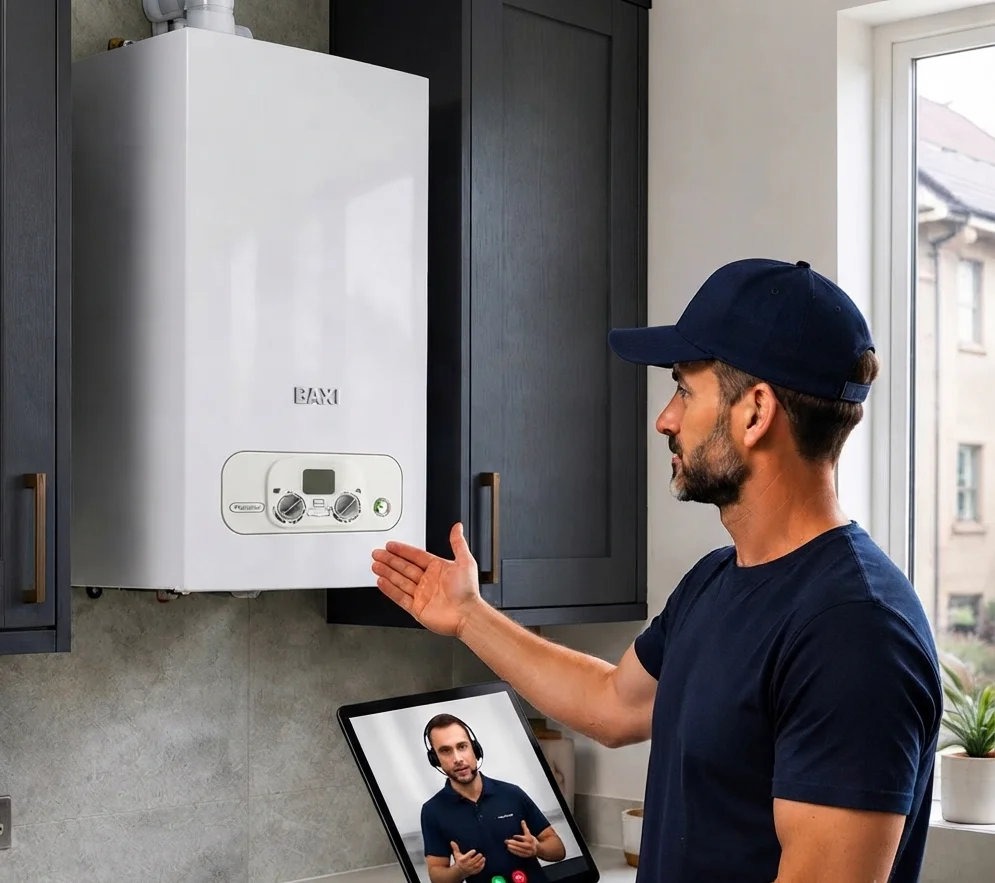
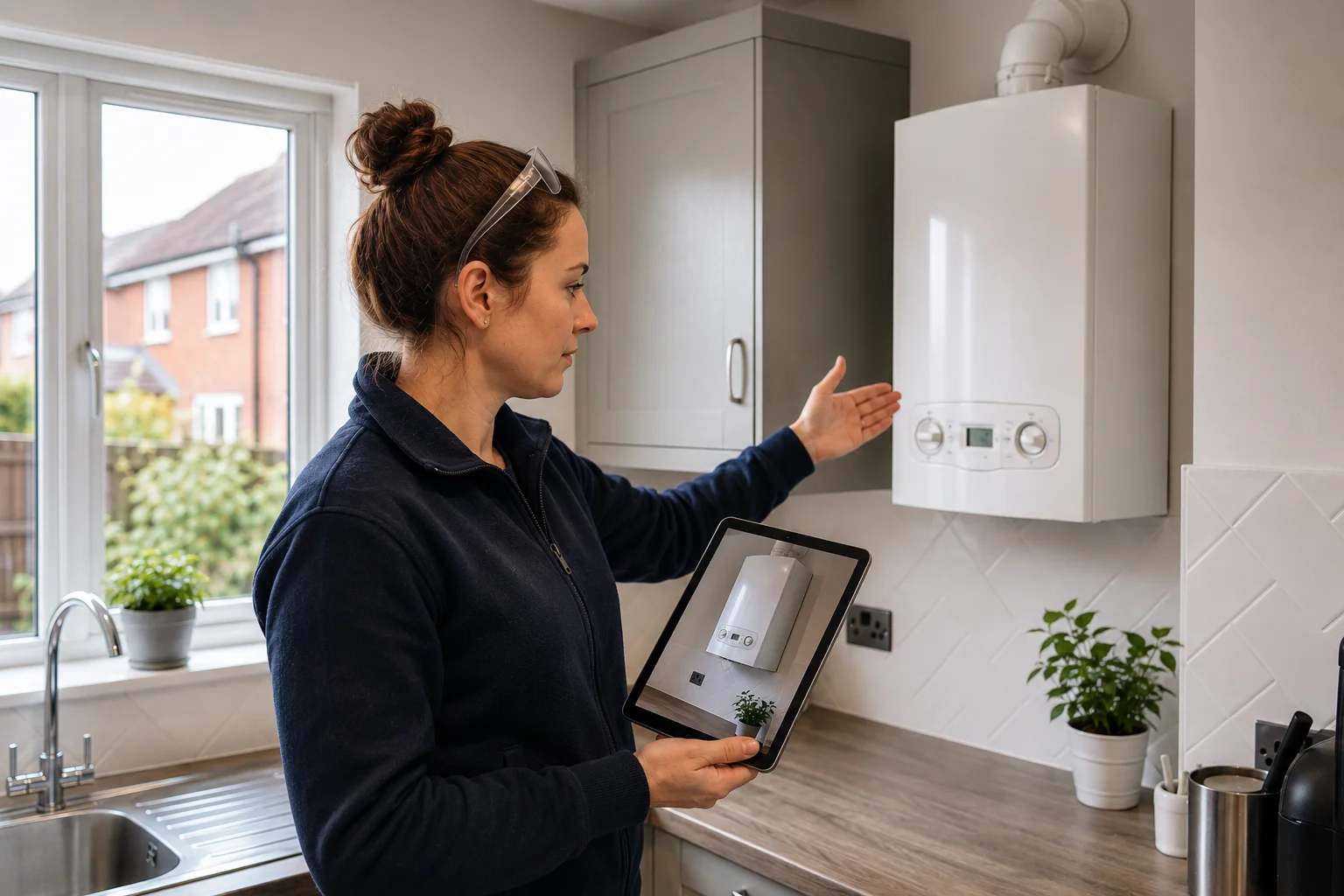
A video call with an engineer can be a useful first step. It allows you to show the boiler, explain what has happened and provide information that may help an engineer decide whether a repair visit is appropriate or whether replacement should be discussed.
Remote advice cannot replace a proper physical inspection where one is needed. However, it can help homeowners understand the likely next step without immediately guessing at the cause or cost.
For anyone looking for boiler repair Cardiff, homeowners can approach sensibly, understanding what a video survey can and cannot establish, is useful.
If your boiler has developed a fault, contact MPH Trades to discuss the symptoms and find out what type of assessment may be appropriate.
Can a video call identify a boiler problem?
A video call can identify some visible symptoms and provide an engineer with useful background information, but it cannot diagnose every fault remotely.
During a call, an engineer may ask you to show:
- The boiler display
- Any fault code shown
- The pressure reading
- The controls
- The thermostat
- Visible pipework
- Signs of water around the boiler
- The surrounding installation
- Any unusual sounds, where they can be described safely
You may also be asked when the problem started and whether the boiler has experienced similar issues previously.
For example, a boiler that repeatedly loses pressure provides different information from one that displays an ignition fault and refuses to start.
The purpose of the video call is therefore to gather useful evidence and decide what should happen next.
What information should you give the engineer?
The more accurately you describe the problem, the easier it is for an engineer to understand the situation.
Before the call, think about:
- When the problem first appeared
- Whether the heating is affected
- Whether hot water is still available
- Whether the boiler displays a fault code
- Whether pressure is dropping
- Whether the boiler makes unusual noises
- Whether the problem happens intermittently
- Whether the boiler has recently been repaired
- Whether the problem occurs at certain times
- Whether anything changed before the fault appeared
Do not remove boiler covers or attempt to inspect gas components yourself. Simply show what you can access safely.
Can a video survey tell if a repair is worthwhile?
Sometimes it can provide useful clues, but a decision about repair should be based on the actual fault and condition of the appliance.
A repair may be worth considering where:
- The boiler is otherwise reliable
- The fault is relatively straightforward
- Replacement parts are available
- The repair is proportionate to the appliance’s condition
- There is no pattern of repeated breakdowns
For example, an isolated fault on a boiler that has otherwise worked reliably may not justify replacing the entire appliance.
The engineer may use the remote information to decide whether a physical inspection is needed before giving you a repair recommendation.
When might replacement be more sensible than repair?
Replacement can become worth considering when faults are frequent, repairs are becoming expensive, or the appliance is showing wider signs of deterioration.
Relevant factors include:
- Repeated breakdowns
- Several repairs within a short period
- Increasing repair bills
- Persistent pressure problems
- Poor heating performance
- Inconsistent hot water
- Difficulty obtaining parts
- Significant corrosion
- An appliance approaching the end of its useful service life
Age alone should not determine the decision.
An older boiler that remains dependable may continue to provide useful service, while a relatively newer appliance with repeated major faults could require more careful consideration.
The key question is whether spending more money on the existing appliance is sensible compared with the expected benefits of replacement.
What can a remote survey reveal about recurring faults?
Recurring problems are particularly useful information for an engineer.
Suppose a homeowner reports that the boiler loses pressure every few days. During the video call, the engineer can see the pressure reading and ask about visible leaks, recent repairs and how quickly the pressure falls.
That information does not necessarily identify the cause. There could be several reasons for repeated pressure loss, some of which require physical inspection.
However, it can help establish that the problem is ongoing rather than an isolated incident.
The same applies to repeated lockouts, intermittent hot water or unusual noises. A detailed history can help an engineer decide what needs checking.
What faults cannot be properly diagnosed over video?
Some boiler problems require physical testing and inspection.
A remote call cannot reliably confirm issues involving:
- Internal components
- Gas pressure
- Combustion performance
- Electrical testing
- Hidden pipework
- Internal leaks
- Component condition
- Detailed flue condition
- Safety-related measurements
If a fault involves any of these areas, an engineer will normally need to assess the boiler in person.
This distinction is important. Remote advice can help determine the next step, but it should not be treated as a replacement for professional testing.
Let’s get started, Which fuel powers your boiler?
Mains Gas
LPG
It just takes 60 Sec
And then you can book a free consultation
Can a video call help distinguish a repair from replacement?
It can help with the initial decision-making process.
An engineer can gather information about the boiler’s age, condition, symptoms and repair history. If the appliance is relatively new and the fault appears isolated, a repair assessment may be appropriate.
If the boiler is older and has experienced several expensive failures, replacement may warrant discussion.
A useful way to think about the process is:
| Situation | Possible next step |
| One isolated fault | Arrange a repair assessment |
| Repeated minor faults | Review repair history and condition |
| Frequent major breakdowns | Compare repair and replacement |
| Parts becoming difficult to source | Discuss replacement |
| Poor heating or hot water performance | Investigate system and boiler |
| Visible leak or safety concern | Arrange professional assessment promptly |
These are general considerations rather than automatic rules. The actual decision depends on the appliance and the engineer’s assessment.
What should you do if the boiler has completely stopped?
First, check the simple information that can be safely observed.
Look at the display and see whether a fault code is present. Check whether the heating controls appear to be calling for heat and note the pressure reading if your system has a visible pressure gauge.
Do not repeatedly reset the boiler if it continues to lock out, and do not attempt to dismantle it.
If there is a suspected gas leak, unusual smell or other immediate safety concern, follow appropriate emergency gas safety guidance rather than relying on a video diagnosis.
For ordinary faults, a remote conversation may help determine whether an engineer should attend for boiler repair or whether replacement needs to be considered.
How does the boiler’s repair history affect the decision?
Repair history can be more useful than age alone.
Imagine two boilers that are both 12 years old. One has required very little attention and continues to operate reliably. The other has needed several repairs during the last 18 months.
Although both appliances are the same age, their circumstances are very different.
A useful review should consider:
- Number of previous repairs
- Cost of previous repairs
- Type of components replaced
- Frequency of faults
- Current performance
- Availability of parts
- Likely future repair requirements
Keeping records of previous repairs can therefore help when discussing whether another repair is worthwhile.
Can repair costs make replacement more attractive?
Yes, particularly when repairs are becoming frequent.
A single repair does not necessarily mean that replacement is financially sensible. However, several significant repairs over a relatively short period can change the calculation.
Homeowners should consider both the immediate repair cost and the possibility of further problems.
This is where professional advice is useful. Rather than assuming that every fault means the boiler needs replacing, an engineer can assess the available options.
MPH Trades can help you understand the practical considerations around repairing an existing boiler or planning a replacement where appropriate.
What happens if a video survey suggests replacement?
A remote survey may indicate that replacement deserves further consideration, but the next step depends on the property.
The engineer may need to arrange a physical assessment to confirm:
- Boiler location
- Available space
- Flue arrangements
- Pipework
- Condensate drainage
- Heating controls
- Access
- Suitable boiler options
Once these details are established, a quotation can be prepared around the actual installation requirements.
This avoids making a replacement decision based only on a video call.
What if the engineer recommends a repair?
If a repair appears sensible, ask the engineer to explain what has failed and what the proposed repair involves.
Useful questions include:
- What has caused the fault?
- Which component needs attention?
- Is the repair expected to resolve the problem?
- Are there other signs of deterioration?
- Is the required part available?
- What is the estimated repair cost?
- Is further investigation required?
- How does the repair compare with replacement?
Clear answers can help you make a decision without feeling pressured.
A typical Cardiff boiler fault scenario
Consider a homeowner with a combi boiler that has recently begun losing pressure. The heating works normally after the system is repressurised, but the problem returns several days later.
During a video call, the engineer asks the homeowner to show the boiler display and pressure reading. The engineer also asks about visible leaks and previous repairs.
The video call cannot establish the precise cause, but it provides useful information before an engineer attends. During the physical assessment, the relevant components can then be checked properly.
If the boiler is otherwise in good condition, repair may be appropriate. If the appliance has already suffered several significant faults, replacement may be discussed instead.
The important point is that the decision is based on evidence rather than guesswork.
How should you choose between repair and replacement?
Start by looking at the complete picture rather than focusing on one fault.
Ask yourself:
- How old is the boiler?
- How often does it break down?
- How much have repairs cost recently?
- Is it still performing adequately?
- Are parts readily available?
- Is the current heating system suitable for the property?
- Would replacement solve ongoing reliability concerns?
You can then discuss these points with an engineer.
If a repair is straightforward and proportionate, there may be little reason to replace a functioning appliance. If reliability is deteriorating and repair costs continue to rise, replacement may provide a more practical long-term solution.
Ready to Resolve Your Boiler Problem?
A video call can be a useful first step when a boiler develops a fault. It allows an engineer to understand the symptoms, review visible information and decide whether an in-person assessment is required.
It cannot replace proper testing where a fault involves internal components, gas pressures, electrical systems or other conditions that cannot be confirmed remotely.
When deciding between boiler repair Cardiff homeowners should consider the complete picture, including repair history, appliance condition, reliability and likely future costs.
A sensible decision does not always mean replacing an old boiler, nor does it always mean repairing it. The right choice depends on the evidence and the condition of the system.
If you are unsure whether your boiler needs boiler repair Cardiff services or replacement, speak to MPH Trades for practical, engineer-led guidance on the next step.
Related articles
Let’s get started, Which fuel powers your boiler?
Mains Gas
LPG
At a glance
When a boiler stops working, the immediate question is usually simple: can it be repaired, or does it need replacing? The answer is not always obvious from a fault code or a single symptom.
A video call with an engineer can be a useful first step. It allows you to show the boiler, explain what has happened and provide information that may help an engineer decide whether a repair visit is appropriate or whether replacement should be discussed.
Remote advice cannot replace a proper physical inspection where one is needed. However, it can help homeowners understand the likely next step without immediately guessing at the cause or cost.
For anyone looking for boiler repair Cardiff, homeowners can approach sensibly, understanding what a video survey can and cannot establish, is useful.
If your boiler has developed a fault, contact MPH Trades to discuss the symptoms and find out what type of assessment may be appropriate.
Can a video call identify a boiler problem?
A video call can identify some visible symptoms and provide an engineer with useful background information, but it cannot diagnose every fault remotely.
During a call, an engineer may ask you to show:
- The boiler display
- Any fault code shown
- The pressure reading
- The controls
- The thermostat
- Visible pipework
- Signs of water around the boiler
- The surrounding installation
- Any unusual sounds, where they can be described safely
You may also be asked when the problem started and whether the boiler has experienced similar issues previously.
For example, a boiler that repeatedly loses pressure provides different information from one that displays an ignition fault and refuses to start.
The purpose of the video call is therefore to gather useful evidence and decide what should happen next.
What information should you give the engineer?
The more accurately you describe the problem, the easier it is for an engineer to understand the situation.
Before the call, think about:
- When the problem first appeared
- Whether the heating is affected
- Whether hot water is still available
- Whether the boiler displays a fault code
- Whether pressure is dropping
- Whether the boiler makes unusual noises
- Whether the problem happens intermittently
- Whether the boiler has recently been repaired
- Whether the problem occurs at certain times
- Whether anything changed before the fault appeared
Do not remove boiler covers or attempt to inspect gas components yourself. Simply show what you can access safely.
Can a video survey tell if a repair is worthwhile?
Sometimes it can provide useful clues, but a decision about repair should be based on the actual fault and condition of the appliance.
A repair may be worth considering where:
- The boiler is otherwise reliable
- The fault is relatively straightforward
- Replacement parts are available
- The repair is proportionate to the appliance’s condition
- There is no pattern of repeated breakdowns
For example, an isolated fault on a boiler that has otherwise worked reliably may not justify replacing the entire appliance.
The engineer may use the remote information to decide whether a physical inspection is needed before giving you a repair recommendation.
When might replacement be more sensible than repair?
Replacement can become worth considering when faults are frequent, repairs are becoming expensive, or the appliance is showing wider signs of deterioration.
Relevant factors include:
- Repeated breakdowns
- Several repairs within a short period
- Increasing repair bills
- Persistent pressure problems
- Poor heating performance
- Inconsistent hot water
- Difficulty obtaining parts
- Significant corrosion
- An appliance approaching the end of its useful service life
Age alone should not determine the decision.
An older boiler that remains dependable may continue to provide useful service, while a relatively newer appliance with repeated major faults could require more careful consideration.
The key question is whether spending more money on the existing appliance is sensible compared with the expected benefits of replacement.
What can a remote survey reveal about recurring faults?
Recurring problems are particularly useful information for an engineer.
Suppose a homeowner reports that the boiler loses pressure every few days. During the video call, the engineer can see the pressure reading and ask about visible leaks, recent repairs and how quickly the pressure falls.
That information does not necessarily identify the cause. There could be several reasons for repeated pressure loss, some of which require physical inspection.
However, it can help establish that the problem is ongoing rather than an isolated incident.
The same applies to repeated lockouts, intermittent hot water or unusual noises. A detailed history can help an engineer decide what needs checking.
What faults cannot be properly diagnosed over video?
Some boiler problems require physical testing and inspection.
A remote call cannot reliably confirm issues involving:
- Internal components
- Gas pressure
- Combustion performance
- Electrical testing
- Hidden pipework
- Internal leaks
- Component condition
- Detailed flue condition
- Safety-related measurements
If a fault involves any of these areas, an engineer will normally need to assess the boiler in person.
This distinction is important. Remote advice can help determine the next step, but it should not be treated as a replacement for professional testing.
Let’s get started, Which fuel powers your boiler?
Mains Gas
LPG
It just takes 60 Sec
And then you can book a free consultation
Can a video call help distinguish a repair from replacement?
It can help with the initial decision-making process.
An engineer can gather information about the boiler’s age, condition, symptoms and repair history. If the appliance is relatively new and the fault appears isolated, a repair assessment may be appropriate.
If the boiler is older and has experienced several expensive failures, replacement may warrant discussion.
A useful way to think about the process is:
| Situation | Possible next step |
| One isolated fault | Arrange a repair assessment |
| Repeated minor faults | Review repair history and condition |
| Frequent major breakdowns | Compare repair and replacement |
| Parts becoming difficult to source | Discuss replacement |
| Poor heating or hot water performance | Investigate system and boiler |
| Visible leak or safety concern | Arrange professional assessment promptly |
These are general considerations rather than automatic rules. The actual decision depends on the appliance and the engineer’s assessment.
What should you do if the boiler has completely stopped?
First, check the simple information that can be safely observed.
Look at the display and see whether a fault code is present. Check whether the heating controls appear to be calling for heat and note the pressure reading if your system has a visible pressure gauge.
Do not repeatedly reset the boiler if it continues to lock out, and do not attempt to dismantle it.
If there is a suspected gas leak, unusual smell or other immediate safety concern, follow appropriate emergency gas safety guidance rather than relying on a video diagnosis.
For ordinary faults, a remote conversation may help determine whether an engineer should attend for boiler repair or whether replacement needs to be considered.
How does the boiler’s repair history affect the decision?
Repair history can be more useful than age alone.
Imagine two boilers that are both 12 years old. One has required very little attention and continues to operate reliably. The other has needed several repairs during the last 18 months.
Although both appliances are the same age, their circumstances are very different.
A useful review should consider:
- Number of previous repairs
- Cost of previous repairs
- Type of components replaced
- Frequency of faults
- Current performance
- Availability of parts
- Likely future repair requirements
Keeping records of previous repairs can therefore help when discussing whether another repair is worthwhile.
Can repair costs make replacement more attractive?
Yes, particularly when repairs are becoming frequent.
A single repair does not necessarily mean that replacement is financially sensible. However, several significant repairs over a relatively short period can change the calculation.
Homeowners should consider both the immediate repair cost and the possibility of further problems.
This is where professional advice is useful. Rather than assuming that every fault means the boiler needs replacing, an engineer can assess the available options.
MPH Trades can help you understand the practical considerations around repairing an existing boiler or planning a replacement where appropriate.
What happens if a video survey suggests replacement?
A remote survey may indicate that replacement deserves further consideration, but the next step depends on the property.
The engineer may need to arrange a physical assessment to confirm:
- Boiler location
- Available space
- Flue arrangements
- Pipework
- Condensate drainage
- Heating controls
- Access
- Suitable boiler options
Once these details are established, a quotation can be prepared around the actual installation requirements.
This avoids making a replacement decision based only on a video call.
What if the engineer recommends a repair?
If a repair appears sensible, ask the engineer to explain what has failed and what the proposed repair involves.
Useful questions include:
- What has caused the fault?
- Which component needs attention?
- Is the repair expected to resolve the problem?
- Are there other signs of deterioration?
- Is the required part available?
- What is the estimated repair cost?
- Is further investigation required?
- How does the repair compare with replacement?
Clear answers can help you make a decision without feeling pressured.
A typical Cardiff boiler fault scenario
Consider a homeowner with a combi boiler that has recently begun losing pressure. The heating works normally after the system is repressurised, but the problem returns several days later.
During a video call, the engineer asks the homeowner to show the boiler display and pressure reading. The engineer also asks about visible leaks and previous repairs.
The video call cannot establish the precise cause, but it provides useful information before an engineer attends. During the physical assessment, the relevant components can then be checked properly.
If the boiler is otherwise in good condition, repair may be appropriate. If the appliance has already suffered several significant faults, replacement may be discussed instead.
The important point is that the decision is based on evidence rather than guesswork.
How should you choose between repair and replacement?
Start by looking at the complete picture rather than focusing on one fault.
Ask yourself:
- How old is the boiler?
- How often does it break down?
- How much have repairs cost recently?
- Is it still performing adequately?
- Are parts readily available?
- Is the current heating system suitable for the property?
- Would replacement solve ongoing reliability concerns?
You can then discuss these points with an engineer.
If a repair is straightforward and proportionate, there may be little reason to replace a functioning appliance. If reliability is deteriorating and repair costs continue to rise, replacement may provide a more practical long-term solution.
Ready to Resolve Your Boiler Problem?
A video call can be a useful first step when a boiler develops a fault. It allows an engineer to understand the symptoms, review visible information and decide whether an in-person assessment is required.
It cannot replace proper testing where a fault involves internal components, gas pressures, electrical systems or other conditions that cannot be confirmed remotely.
When deciding between boiler repair Cardiff homeowners should consider the complete picture, including repair history, appliance condition, reliability and likely future costs.
A sensible decision does not always mean replacing an old boiler, nor does it always mean repairing it. The right choice depends on the evidence and the condition of the system.
If you are unsure whether your boiler needs boiler repair Cardiff services or replacement, speak to MPH Trades for practical, engineer-led guidance on the next step.
Related articles
Address
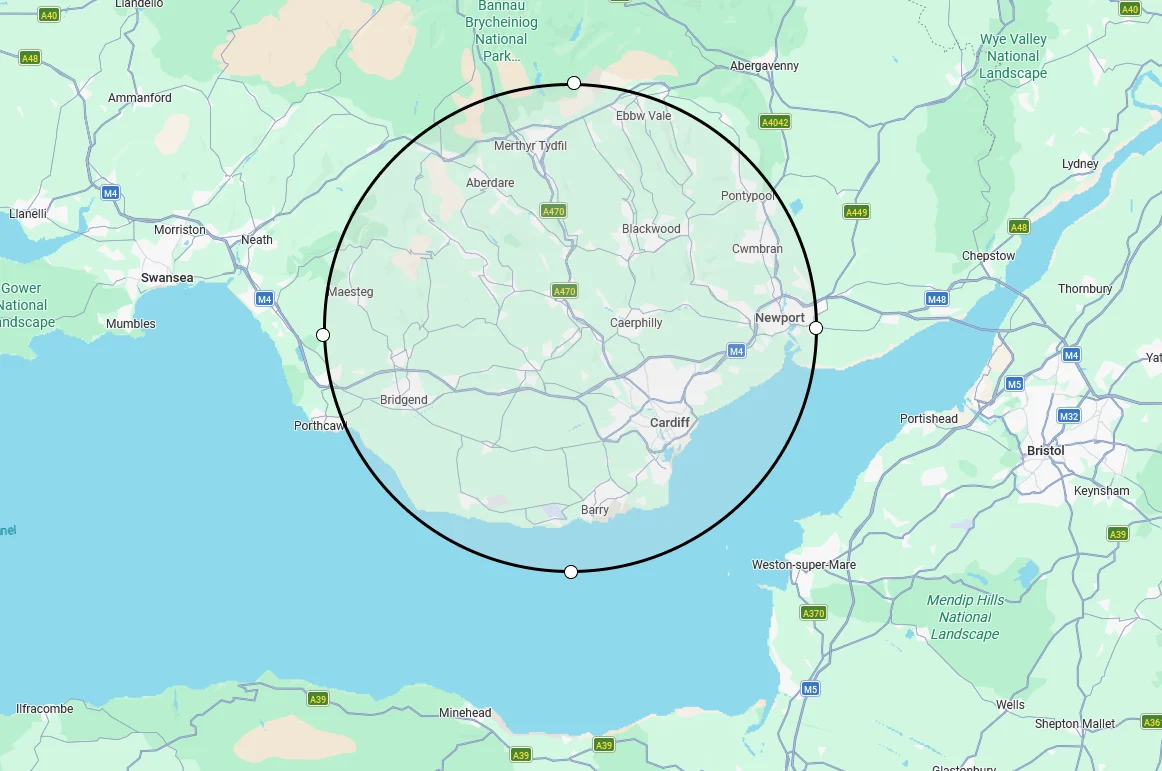
Office Location:
376 Newport Road
Cardiff
CF23 9AE
The content on this website is owned by us and our licensors. Do not copy the content (including images) without our consent.
MPH INSTALLATIONS LTD (MPH PLUMBING & HEATING) is an Introducer Appointed Representative (Financial Services Register No. 916214) of Phoenix Financial Consultants Limited (Phoenix). Phoenix is a credit broker, not a lender. Phoenix is authorised and regulated by the Financial Conduct Authority (FRN: 539195), and offers finance from its panel of lenders. All finance subject to status and credit checks.

Amout of credit
£0.00
Monthly
£0.00
Total payable
£0.00
Interest (fixed)
£0.00
APR
-