

Boiler Repair Cardiff: When Keeping an Old Boiler Is a False Economy
Understand when ongoing boiler repairs in Cardiff may cost more in the long run than investing in a suitable replacement.

Why you can trust our content
We understand that the boiler industry can be confusing, with plenty of outdated or misleading information. That’s why we rely only on trusted, proven sources to guide our advice and installations:

At a glance
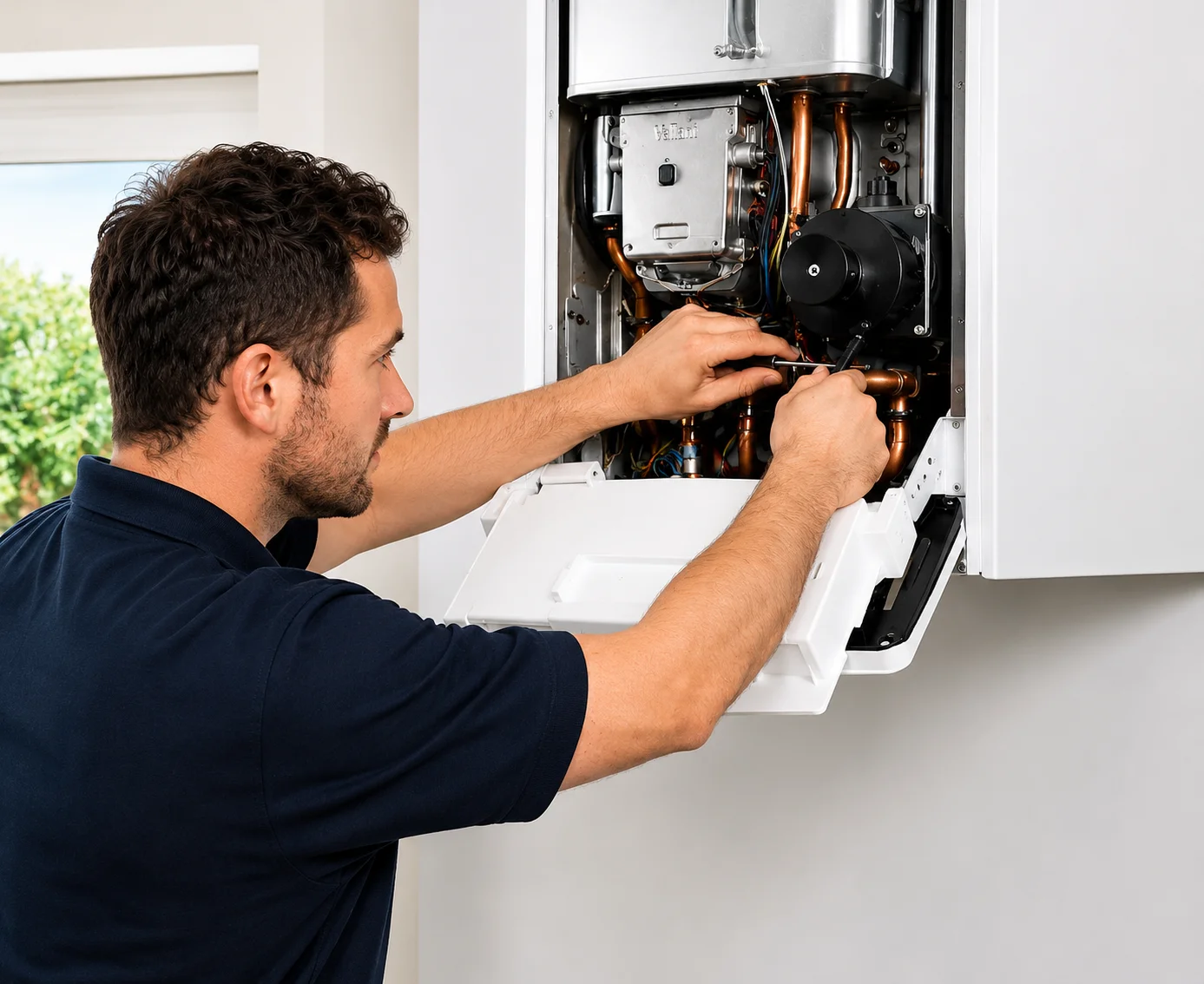
When a boiler stops working, repair is often the first thing a homeowner considers. If a relatively small fault can restore heating and hot water, repairing the existing appliance may be the most sensible option.
The calculation becomes less straightforward when the same boiler keeps developing problems. An older appliance that requires repeated repairs can gradually become more expensive to keep running. What looks like a cheaper alternative to replacement may no longer provide good value once several repair bills, reduced reliability and potential future faults are taken into account.
For homeowners considering boiler repair Cardiff, the important question is not simply whether the boiler can be repaired. It is whether repairing it remains a sensible option based on its age, condition, repair history and expected future reliability.
When is boiler repair usually the sensible choice?
Repair can make sense when the fault is clearly identified, and the boiler is otherwise reliable.
For example, a relatively straightforward component failure does not necessarily justify replacing an entire heating system.
A repair may be appropriate when:
- The boiler has generally been reliable
- The fault is isolated
- Replacement parts are available
- The repair cost is proportionate
- The appliance still meets household requirements
- There are no signs of wider deterioration
The age of the boiler should be considered, but it should not be the only deciding factor.
A well-maintained older boiler may continue to provide useful service, while a younger appliance with repeated major faults may deserve closer investigation.
If your boiler has developed a fault, MPH can assess the problem and help you understand whether repair or replacement is the more practical route.
How can repeated repairs become a false economy?
A single repair may be relatively inexpensive. Several repairs over a short period can tell a different story.
Suppose an older boiler develops one fault, then another component fails several months later. If further repairs follow, the homeowner may eventually spend a significant amount without improving the underlying age or condition of the appliance.
This does not mean every repair bill should be treated as money wasted. Repairs can extend the useful life of a boiler and may be entirely reasonable.
The issue is the pattern.
If breakdowns are becoming more frequent, it is worth looking at the total amount being spent rather than considering each repair separately.
What should you consider before paying for another repair?
Ask yourself:
- How old is the boiler?
- How many times has it broken down recently?
- How much have repairs cost over the last year or two?
- Are replacement parts readily available?
- Is the boiler still meeting household heating and hot water needs?
- Are there other signs of deterioration?
- What would replacement cost compared with continued repairs?
These questions help put the latest repair into context.
Does an old boiler always need replacing?
No.
Age alone is not enough to determine whether a boiler should be replaced.
An older appliance may continue working reliably if it has been properly maintained and remains suitable for the property.
On the other hand, age can become more relevant when combined with repeated breakdowns, declining performance or increasing repair costs.
A sensible assessment considers the complete picture rather than using an arbitrary age threshold.
How much can repeated boiler repairs cost?
There is no universal repair price because the cost depends on the fault, appliance and parts required.
A minor repair may be relatively inexpensive, while a major component replacement can cost considerably more.
Homeowners should also consider indirect costs.
Repeated failures may mean taking time off work for engineer visits, dealing with periods without heating or hot water and arranging further repairs when another component fails.
These inconveniences do not necessarily make replacement financially better, but they form part of the practical value of having a reliable heating system.
Let’s get started, Which fuel powers your boiler?
Mains Gas
LPG
It just takes 60 Sec
And then you can book a free consultation
Could a new boiler be more economical in the long term?
Potentially.
A modern replacement can provide improved efficiency and reliability compared with a heavily ageing appliance, although actual savings vary between properties and households.
A replacement may also reduce the likelihood of paying for repeated repairs associated with the old boiler.
However, the cost of a new installation is significantly higher than most individual repairs. The comparison therefore needs to look at the longer term rather than expecting an immediate financial saving.
This is why an honest assessment should consider both options.
If you are repeatedly paying for repairs, ask MPH to look at the bigger picture rather than simply arranging another short-term fix.
What warning signs suggest replacement should be considered?
There are several indicators that it may be time to investigate replacement.
| Warning sign | What it could indicate |
| Frequent breakdowns | The appliance may be becoming unreliable |
| Several repairs in a short period | Repair costs are accumulating |
| Increasingly expensive parts | Maintenance may become harder to justify |
| Poor heating performance | The system may no longer meet demand |
| Unreliable hot water | The boiler may be struggling with household requirements |
| Persistent pressure problems | A recurring fault may need investigation |
| Unusual noises | Components may be deteriorating |
| Boiler no longer supported | Future repairs may become more difficult |
None of these signs automatically means replacement is required.
They indicate that the homeowner should consider whether continuing to repair the appliance remains sensible.
What if the boiler breaks down during winter?
A winter breakdown can make the decision more difficult because heating and hot water may be needed urgently.
If the fault is repairable, a repair may restore the system.
If the boiler is old and has already experienced repeated failures, however, the homeowner may need to decide whether to spend more money repairing it or investigate replacement.
Planning before a complete failure can reduce this pressure.
If your boiler has already shown several warning signs, obtaining a replacement quotation while it is still operating can help you understand the alternatives.
Can repair costs be compared directly with replacement costs?
Not perfectly.
A repair addresses a specific fault. Replacement provides a new appliance and installation but involves a much larger initial expense.
A useful comparison therefore needs to consider:
- Current repair cost
- Previous repair spending
- Expected future reliability
- Boiler age and condition
- Energy efficiency
- Replacement installation cost
- Household heating requirements
- Availability of parts and servicing
For example, a £300 repair is not automatically better value than a £2,000-plus replacement. But neither is replacement automatically better simply because the boiler is old.
The correct decision depends on the circumstances.
A typical Cardiff boiler repair scenario
Consider a homeowner with an older gas boiler that has developed its third significant fault in eighteen months.
The first repair was inexpensive. The second required a more substantial component. Now another problem has appeared.
The homeowner could simply pay for another repair. However, they decided to have the boiler assessed and request a replacement quotation as well.
The comparison shows the likely cost of another repair alongside the wider investment required for a replacement.
This does not automatically mean replacement is the right answer. It gives the homeowner enough information to make a considered decision rather than treating each breakdown as an isolated event.
What should you ask an engineer about an ageing boiler?
Before agreeing to another repair, ask:
- What exactly has failed?
- Is the fault likely to recur?
- Is the component readily available?
- Are there other signs of deterioration?
- How old is the appliance?
- Has the boiler had similar faults before?
- Would you recommend repair or replacement based on its current condition?
- What maintenance is likely to be needed next?
A good engineer should be able to explain the fault and the available options without pressuring you into a particular decision.
Is it worth repairing a boiler that keeps breaking down?
The answer depends on the pattern of faults rather than one repair alone.
If the appliance has one isolated problem and is otherwise reliable, repair may be entirely reasonable.
If it has required several repairs, regularly loses pressure, struggles to provide hot water or has become increasingly unreliable, replacement deserves consideration.
For homeowners searching for boiler repair Cardiff, the objective should be to understand the cause of the problem first.
If your boiler keeps breaking down, contact MPH for practical advice on the condition of your existing system and the options available.
When does boiler repair become a false economy?
Keeping an old boiler running is not automatically a mistake. Repairing a reliable appliance with an isolated fault can often be sensible.
The concern arises when repair bills become frequent, faults start appearing repeatedly, and the appliance becomes increasingly difficult or expensive to maintain.
At that point, continuing to pay for individual repairs without considering the bigger picture may not provide the best long-term value.
For homeowners considering boiler repair, comparing the current fault with the boiler’s age, repair history, efficiency and likely future reliability can provide a much clearer basis for deciding what to do next.
MPH can assess boiler problems and help homeowners understand whether a repair or replacement should be investigated, based on the condition of the actual system.
Related articles

Let’s get started, Which fuel powers your boiler?
Mains Gas
LPG
At a glance
When a boiler stops working, repair is often the first thing a homeowner considers. If a relatively small fault can restore heating and hot water, repairing the existing appliance may be the most sensible option.
The calculation becomes less straightforward when the same boiler keeps developing problems. An older appliance that requires repeated repairs can gradually become more expensive to keep running. What looks like a cheaper alternative to replacement may no longer provide good value once several repair bills, reduced reliability and potential future faults are taken into account.
For homeowners considering boiler repair Cardiff, the important question is not simply whether the boiler can be repaired. It is whether repairing it remains a sensible option based on its age, condition, repair history and expected future reliability.
When is boiler repair usually the sensible choice?
Repair can make sense when the fault is clearly identified, and the boiler is otherwise reliable.
For example, a relatively straightforward component failure does not necessarily justify replacing an entire heating system.
A repair may be appropriate when:
- The boiler has generally been reliable
- The fault is isolated
- Replacement parts are available
- The repair cost is proportionate
- The appliance still meets household requirements
- There are no signs of wider deterioration
The age of the boiler should be considered, but it should not be the only deciding factor.
A well-maintained older boiler may continue to provide useful service, while a younger appliance with repeated major faults may deserve closer investigation.
If your boiler has developed a fault, MPH can assess the problem and help you understand whether repair or replacement is the more practical route.
How can repeated repairs become a false economy?
A single repair may be relatively inexpensive. Several repairs over a short period can tell a different story.
Suppose an older boiler develops one fault, then another component fails several months later. If further repairs follow, the homeowner may eventually spend a significant amount without improving the underlying age or condition of the appliance.
This does not mean every repair bill should be treated as money wasted. Repairs can extend the useful life of a boiler and may be entirely reasonable.
The issue is the pattern.
If breakdowns are becoming more frequent, it is worth looking at the total amount being spent rather than considering each repair separately.
What should you consider before paying for another repair?
Ask yourself:
- How old is the boiler?
- How many times has it broken down recently?
- How much have repairs cost over the last year or two?
- Are replacement parts readily available?
- Is the boiler still meeting household heating and hot water needs?
- Are there other signs of deterioration?
- What would replacement cost compared with continued repairs?
These questions help put the latest repair into context.
Does an old boiler always need replacing?
No.
Age alone is not enough to determine whether a boiler should be replaced.
An older appliance may continue working reliably if it has been properly maintained and remains suitable for the property.
On the other hand, age can become more relevant when combined with repeated breakdowns, declining performance or increasing repair costs.
A sensible assessment considers the complete picture rather than using an arbitrary age threshold.
How much can repeated boiler repairs cost?
There is no universal repair price because the cost depends on the fault, appliance and parts required.
A minor repair may be relatively inexpensive, while a major component replacement can cost considerably more.
Homeowners should also consider indirect costs.
Repeated failures may mean taking time off work for engineer visits, dealing with periods without heating or hot water and arranging further repairs when another component fails.
These inconveniences do not necessarily make replacement financially better, but they form part of the practical value of having a reliable heating system.
Let’s get started, Which fuel powers your boiler?
Mains Gas
LPG
It just takes 60 Sec
And then you can book a free consultation
Could a new boiler be more economical in the long term?
Potentially.
A modern replacement can provide improved efficiency and reliability compared with a heavily ageing appliance, although actual savings vary between properties and households.
A replacement may also reduce the likelihood of paying for repeated repairs associated with the old boiler.
However, the cost of a new installation is significantly higher than most individual repairs. The comparison therefore needs to look at the longer term rather than expecting an immediate financial saving.
This is why an honest assessment should consider both options.
If you are repeatedly paying for repairs, ask MPH to look at the bigger picture rather than simply arranging another short-term fix.
What warning signs suggest replacement should be considered?
There are several indicators that it may be time to investigate replacement.
| Warning sign | What it could indicate |
| Frequent breakdowns | The appliance may be becoming unreliable |
| Several repairs in a short period | Repair costs are accumulating |
| Increasingly expensive parts | Maintenance may become harder to justify |
| Poor heating performance | The system may no longer meet demand |
| Unreliable hot water | The boiler may be struggling with household requirements |
| Persistent pressure problems | A recurring fault may need investigation |
| Unusual noises | Components may be deteriorating |
| Boiler no longer supported | Future repairs may become more difficult |
None of these signs automatically means replacement is required.
They indicate that the homeowner should consider whether continuing to repair the appliance remains sensible.
What if the boiler breaks down during winter?
A winter breakdown can make the decision more difficult because heating and hot water may be needed urgently.
If the fault is repairable, a repair may restore the system.
If the boiler is old and has already experienced repeated failures, however, the homeowner may need to decide whether to spend more money repairing it or investigate replacement.
Planning before a complete failure can reduce this pressure.
If your boiler has already shown several warning signs, obtaining a replacement quotation while it is still operating can help you understand the alternatives.
Can repair costs be compared directly with replacement costs?
Not perfectly.
A repair addresses a specific fault. Replacement provides a new appliance and installation but involves a much larger initial expense.
A useful comparison therefore needs to consider:
- Current repair cost
- Previous repair spending
- Expected future reliability
- Boiler age and condition
- Energy efficiency
- Replacement installation cost
- Household heating requirements
- Availability of parts and servicing
For example, a £300 repair is not automatically better value than a £2,000-plus replacement. But neither is replacement automatically better simply because the boiler is old.
The correct decision depends on the circumstances.
A typical Cardiff boiler repair scenario
Consider a homeowner with an older gas boiler that has developed its third significant fault in eighteen months.
The first repair was inexpensive. The second required a more substantial component. Now another problem has appeared.
The homeowner could simply pay for another repair. However, they decided to have the boiler assessed and request a replacement quotation as well.
The comparison shows the likely cost of another repair alongside the wider investment required for a replacement.
This does not automatically mean replacement is the right answer. It gives the homeowner enough information to make a considered decision rather than treating each breakdown as an isolated event.
What should you ask an engineer about an ageing boiler?
Before agreeing to another repair, ask:
- What exactly has failed?
- Is the fault likely to recur?
- Is the component readily available?
- Are there other signs of deterioration?
- How old is the appliance?
- Has the boiler had similar faults before?
- Would you recommend repair or replacement based on its current condition?
- What maintenance is likely to be needed next?
A good engineer should be able to explain the fault and the available options without pressuring you into a particular decision.
Is it worth repairing a boiler that keeps breaking down?
The answer depends on the pattern of faults rather than one repair alone.
If the appliance has one isolated problem and is otherwise reliable, repair may be entirely reasonable.
If it has required several repairs, regularly loses pressure, struggles to provide hot water or has become increasingly unreliable, replacement deserves consideration.
For homeowners searching for boiler repair Cardiff, the objective should be to understand the cause of the problem first.
If your boiler keeps breaking down, contact MPH for practical advice on the condition of your existing system and the options available.
When does boiler repair become a false economy?
Keeping an old boiler running is not automatically a mistake. Repairing a reliable appliance with an isolated fault can often be sensible.
The concern arises when repair bills become frequent, faults start appearing repeatedly, and the appliance becomes increasingly difficult or expensive to maintain.
At that point, continuing to pay for individual repairs without considering the bigger picture may not provide the best long-term value.
For homeowners considering boiler repair, comparing the current fault with the boiler’s age, repair history, efficiency and likely future reliability can provide a much clearer basis for deciding what to do next.
MPH can assess boiler problems and help homeowners understand whether a repair or replacement should be investigated, based on the condition of the actual system.
Related articles
Address
Office Location:
376 Newport Road
Cardiff
CF23 9AE

The content on this website is owned by us and our licensors. Do not copy the content (including images) without our consent.

Powered by We Build Trades © 2026