

Combi Boiler Replacement Cardiff: When a Modern Gas Boiler Still Makes Sense
Explore when replacing your combi boiler makes sense and how a modern gas boiler can meet your home’s heating and hot water needs.

Why you can trust our content
We understand that the boiler industry can be confusing, with plenty of outdated or misleading information. That’s why we rely only on trusted, proven sources to guide our advice and installations:

At a glance
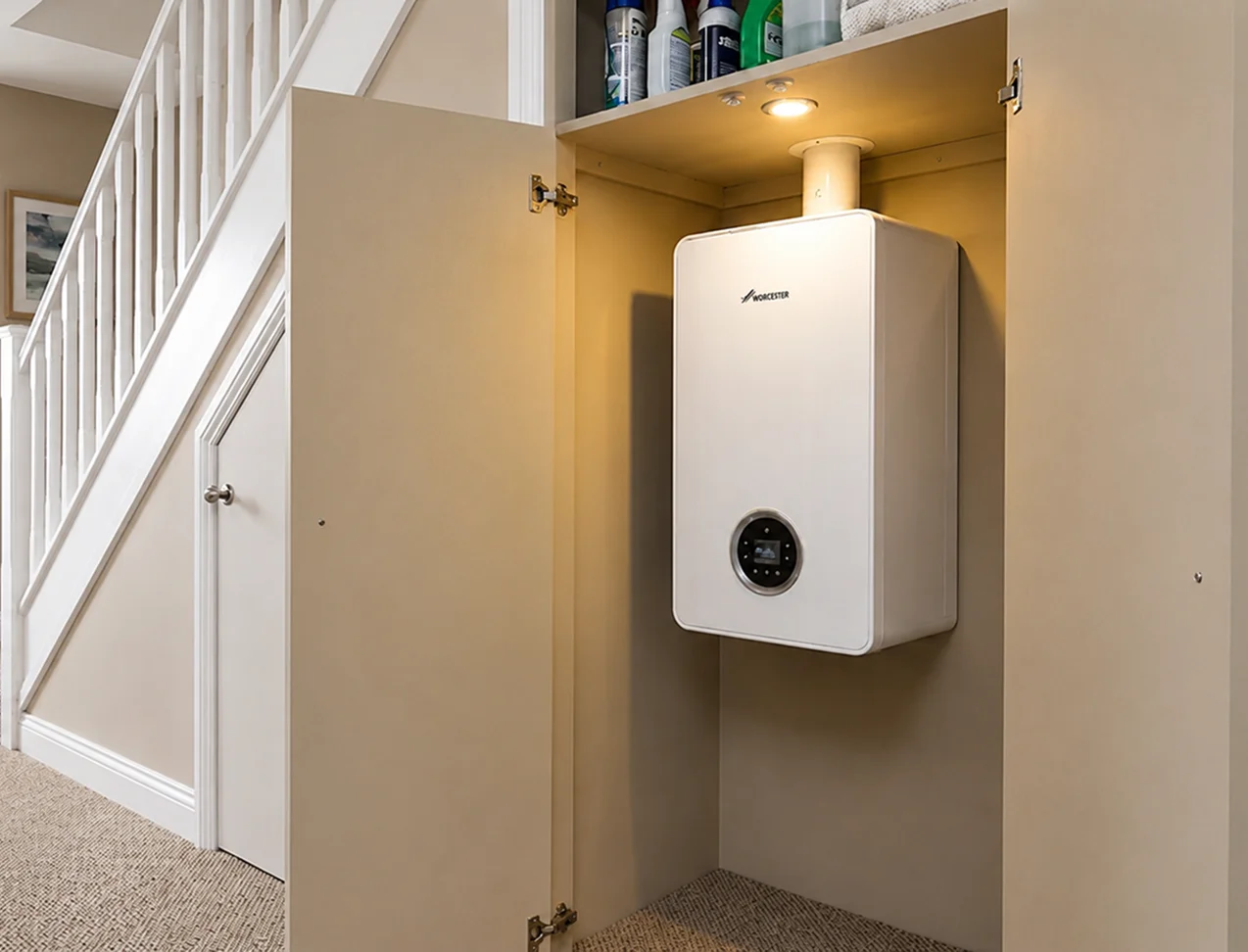
Gas heating is changing, but that does not automatically mean every homeowner needs to move away from a gas boiler immediately. For many properties, a modern combi boiler can still provide a practical way to heat the home and produce hot water from one compact appliance.
The more useful question is whether a combi boiler remains suitable for your particular property, household and heating requirements.
If an existing boiler is becoming unreliable, inefficient or expensive to repair, replacing it with a modern system may be worth considering. Equally, if the current boiler is working well, immediate replacement may not be necessary.
For homeowners considering combi boiler replacement Cardiff, the decision should be based on the condition of the existing system, the property’s hot water demand and the likely costs involved rather than simply the age of the boiler.
When does a combi boiler need replacing?
A combi boiler does not have a fixed replacement date. Some boilers can continue operating reliably for many years with appropriate servicing and maintenance.
Replacement becomes more worth investigating when several warning signs start appearing together.
These can include:
- Frequent breakdowns
- Repeated component failures
- Increasing repair bills
- Unreliable hot water
- Poor heating performance
- Unusual noises
- Difficulty sourcing replacement parts
- Persistent pressure problems
- An appliance that no longer meets household demand
One isolated fault does not necessarily mean replacement is required. A straightforward repair may restore an otherwise reliable boiler.
However, repeated problems can change the financial calculation.
If your combi boiler is becoming unreliable, MPH can assess the existing system and explain whether repair or replacement is the more appropriate option.
Why can a modern combi boiler still make sense?
A combi boiler combines central heating and domestic hot water within one appliance. Unlike a traditional system with a separate hot water cylinder, it heats water as it is required.
This arrangement can be particularly useful where:
- Space is limited
- There is no need for a large hot water cylinder
- Household hot water demand is moderate
- A compact heating system is preferred
- The existing property is already configured for combi operation
Modern appliances can also offer improved controls and efficiency compared with older installations.
That does not mean a combi boiler is suitable for every home. Larger households with several bathrooms and simultaneous hot water demand may need a different system arrangement.
Is a combi boiler suitable for every Cardiff home?
No. Property size is only one part of the assessment.
The installer should consider how many people live in the property, how many bathrooms are used, the number of radiators and the household’s typical hot water demand.
| Factor | Why it matters |
| Number of occupants | More people can increase hot water demand |
| Bathrooms | Multiple bathrooms may increase simultaneous demand |
| Water pressure | A combi relies on adequate mains water flow |
| Property size | Helps determine appropriate heating output |
| Available space | Influences boiler location and installation options |
| Existing system | Determines how straightforward replacement may be |
| Hot water habits | Regular simultaneous showers can affect suitability |
This assessment helps prevent a common mistake: choosing a boiler simply because it has a higher output.
A larger appliance is not automatically better if the property’s heating and hot water requirements do not justify it.
What should you check before replacing an old combi boiler?
Before arranging combi boiler replacement in Cardiff, it is useful to understand why the current boiler is causing problems.
An engineer may identify a repairable issue rather than a reason for complete replacement.
For example, a faulty component may be replaced relatively easily. In another case, repeated faults across an ageing appliance may indicate that continued repair spending is becoming difficult to justify.
Ask for an explanation of:
- The existing boiler’s condition
- The cause of recent faults
- Whether repairs are still practical
- The expected suitability of a replacement combi
- Any changes needed to the installation
- The controls being proposed
- The likely maintenance requirements
This gives you a clearer basis for making a decision.
Let’s get started, Which fuel powers your boiler?
Mains Gas
LPG
It just takes 60 Sec
And then you can book a free consultation
How much does combi boiler replacement cost?
The boiler replacement cost varies considerably between properties because the boiler itself is only one element of the installation.
The final quotation can be affected by:
- Boiler model and output
- Labour
- Removal of the existing appliance
- Flue requirements
- Pipework alterations
- Heating controls
- Boiler location
- Condensate arrangements
- Access to the property
- Additional installation work
A straightforward replacement in the existing position may require less work than moving the boiler to another part of the property.
That is why online starting prices should not be treated as guaranteed costs for a specific home.
What is the difference between a boiler price and the installation cost?
A boiler advertised online is often simply the appliance price.
Installation involves considerably more than fitting the box on the wall. The engineer may need to disconnect and remove the old boiler, connect the replacement, check relevant pipework, install the flue and condensate arrangements, configure controls and commission the system.
Additional work may also be required depending on the property’s existing installation.
When comparing quotations, look at the complete scope rather than the boiler price alone.
Could replacing a combi boiler improve efficiency?
It can, particularly when replacing an old appliance with a modern, properly sized boiler.
However, the improvement in household energy use depends on more than the boiler itself.
Heating controls, insulation, radiator performance, thermostat settings and how the system is operated all have an influence.
A replacement boiler should therefore form part of a wider discussion about how the heating system is being used.
There is little value in focusing exclusively on appliance efficiency while ignoring poor controls or excessive heat loss elsewhere in the property.
If you are comparing replacement options, ask MPH to assess the complete heating setup rather than selecting a boiler based solely on advertised specifications.
Does replacing a combi boiler future-proof a home?
No heating installation can be guaranteed to remain the ideal solution indefinitely.
The term “future-proof” is often used loosely, but homeowners should instead consider whether the chosen system is likely to remain practical for their foreseeable needs.
Important questions include:
- Will the boiler provide enough hot water?
- Is the output appropriate for the property?
- Are the controls suitable?
- Can the system be maintained effectively?
- Does the installation leave reasonable options for future changes?
- Does the household expect its heating requirements to change?
A good replacement decision should solve today’s problem without unnecessarily restricting future choices.
What if the existing combi boiler still works?
If an existing boiler is reliable and economical to maintain, there may be no immediate reason to replace it.
Age alone does not prove that an appliance needs replacing.
A homeowner might reasonably continue using an older boiler while monitoring its performance and setting aside funds for eventual replacement.
On the other hand, a boiler that is frequently failing may justify investigation even if it technically remains operational.
The key distinction is between a boiler that is old but dependable and one that is becoming increasingly costly or unreliable.
A typical Cardiff replacement scenario
Consider a family living in a semi-detached property with an older combi boiler. The appliance still provides heating and hot water, but the family has experienced several faults over the last two years.
Rather than waiting for a complete failure, they arrange an assessment.
The engineer checks the existing boiler, household demand, water supply and available installation space. The assessment confirms that a modern combi remains suitable and that the replacement can be installed in broadly the same location.
The homeowners can then compare a planned quotation with the likely cost of continued repairs.
The important point is not that every older combi should be replaced. It is that a planned assessment gives the homeowner more information before an emergency occurs.
How should you compare combi boiler replacement quotations?
When comparing boiler replacement cost, look beyond the headline figure.
A useful comparison should include:
- Exact boiler model
- Boiler output
- Labour and installation
- Controls
- Removal of the existing appliance
- Flue and associated installation work
- Warranty information
- Commissioning
- Any additional work
- Future servicing requirements
Two quotations can look very different while offering similar overall installations, or appear similar while covering very different amounts of work.
If something is unclear, ask the installer to explain it before agreeing.
Should you replace a combi boiler now or wait?
There is no universal answer.
Replacement may be worth investigating if the existing appliance has become unreliable, repairs are accumulating or the system no longer meets household requirements.
Waiting may be reasonable when the boiler remains dependable, and maintenance costs are manageable.
The most useful approach is to assess the current system, understand its likely remaining usefulness and compare that with the investment required for replacement.
When does a modern combi boiler make sense?
A modern combi boiler can still be a practical heating solution for many homes, particularly where space is limited and household hot water demand suits a combination system.
The decision to replace an existing appliance should not be based on headlines about changing heating technology alone. Property requirements, system condition, repair history, water demand and installation requirements all matter.
For homeowners considering combi boiler replacement in Cardiff, getting the system assessed before a complete breakdown can make the decision clearer and give you time to understand your options.
MPH can help homeowners assess their existing heating system and discuss suitable replacement options based on the property rather than relying on a one-size-fits-all recommendation.
If your combi boiler is becoming unreliable or expensive to maintain, contact MPH to discuss whether replacement is appropriate for your home.
Related articles
Let’s get started, Which fuel powers your boiler?
Mains Gas
LPG
At a glance
Gas heating is changing, but that does not automatically mean every homeowner needs to move away from a gas boiler immediately. For many properties, a modern combi boiler can still provide a practical way to heat the home and produce hot water from one compact appliance.
The more useful question is whether a combi boiler remains suitable for your particular property, household and heating requirements.
If an existing boiler is becoming unreliable, inefficient or expensive to repair, replacing it with a modern system may be worth considering. Equally, if the current boiler is working well, immediate replacement may not be necessary.
For homeowners considering combi boiler replacement Cardiff, the decision should be based on the condition of the existing system, the property’s hot water demand and the likely costs involved rather than simply the age of the boiler.
When does a combi boiler need replacing?
A combi boiler does not have a fixed replacement date. Some boilers can continue operating reliably for many years with appropriate servicing and maintenance.
Replacement becomes more worth investigating when several warning signs start appearing together.
These can include:
- Frequent breakdowns
- Repeated component failures
- Increasing repair bills
- Unreliable hot water
- Poor heating performance
- Unusual noises
- Difficulty sourcing replacement parts
- Persistent pressure problems
- An appliance that no longer meets household demand
One isolated fault does not necessarily mean replacement is required. A straightforward repair may restore an otherwise reliable boiler.
However, repeated problems can change the financial calculation.
If your combi boiler is becoming unreliable, MPH can assess the existing system and explain whether repair or replacement is the more appropriate option.
Why can a modern combi boiler still make sense?
A combi boiler combines central heating and domestic hot water within one appliance. Unlike a traditional system with a separate hot water cylinder, it heats water as it is required.
This arrangement can be particularly useful where:
- Space is limited
- There is no need for a large hot water cylinder
- Household hot water demand is moderate
- A compact heating system is preferred
- The existing property is already configured for combi operation
Modern appliances can also offer improved controls and efficiency compared with older installations.
That does not mean a combi boiler is suitable for every home. Larger households with several bathrooms and simultaneous hot water demand may need a different system arrangement.
Is a combi boiler suitable for every Cardiff home?
No. Property size is only one part of the assessment.
The installer should consider how many people live in the property, how many bathrooms are used, the number of radiators and the household’s typical hot water demand.
| Factor | Why it matters |
| Number of occupants | More people can increase hot water demand |
| Bathrooms | Multiple bathrooms may increase simultaneous demand |
| Water pressure | A combi relies on adequate mains water flow |
| Property size | Helps determine appropriate heating output |
| Available space | Influences boiler location and installation options |
| Existing system | Determines how straightforward replacement may be |
| Hot water habits | Regular simultaneous showers can affect suitability |
This assessment helps prevent a common mistake: choosing a boiler simply because it has a higher output.
A larger appliance is not automatically better if the property’s heating and hot water requirements do not justify it.
What should you check before replacing an old combi boiler?
Before arranging combi boiler replacement in Cardiff, it is useful to understand why the current boiler is causing problems.
An engineer may identify a repairable issue rather than a reason for complete replacement.
For example, a faulty component may be replaced relatively easily. In another case, repeated faults across an ageing appliance may indicate that continued repair spending is becoming difficult to justify.
Ask for an explanation of:
- The existing boiler’s condition
- The cause of recent faults
- Whether repairs are still practical
- The expected suitability of a replacement combi
- Any changes needed to the installation
- The controls being proposed
- The likely maintenance requirements
This gives you a clearer basis for making a decision.
Let’s get started, Which fuel powers your boiler?
Mains Gas
LPG
It just takes 60 Sec
And then you can book a free consultation
How much does combi boiler replacement cost?
The boiler replacement cost varies considerably between properties because the boiler itself is only one element of the installation.
The final quotation can be affected by:
- Boiler model and output
- Labour
- Removal of the existing appliance
- Flue requirements
- Pipework alterations
- Heating controls
- Boiler location
- Condensate arrangements
- Access to the property
- Additional installation work
A straightforward replacement in the existing position may require less work than moving the boiler to another part of the property.
That is why online starting prices should not be treated as guaranteed costs for a specific home.
What is the difference between a boiler price and the installation cost?
A boiler advertised online is often simply the appliance price.
Installation involves considerably more than fitting the box on the wall. The engineer may need to disconnect and remove the old boiler, connect the replacement, check relevant pipework, install the flue and condensate arrangements, configure controls and commission the system.
Additional work may also be required depending on the property’s existing installation.
When comparing quotations, look at the complete scope rather than the boiler price alone.
Could replacing a combi boiler improve efficiency?
It can, particularly when replacing an old appliance with a modern, properly sized boiler.
However, the improvement in household energy use depends on more than the boiler itself.
Heating controls, insulation, radiator performance, thermostat settings and how the system is operated all have an influence.
A replacement boiler should therefore form part of a wider discussion about how the heating system is being used.
There is little value in focusing exclusively on appliance efficiency while ignoring poor controls or excessive heat loss elsewhere in the property.
If you are comparing replacement options, ask MPH to assess the complete heating setup rather than selecting a boiler based solely on advertised specifications.
Does replacing a combi boiler future-proof a home?
No heating installation can be guaranteed to remain the ideal solution indefinitely.
The term “future-proof” is often used loosely, but homeowners should instead consider whether the chosen system is likely to remain practical for their foreseeable needs.
Important questions include:
- Will the boiler provide enough hot water?
- Is the output appropriate for the property?
- Are the controls suitable?
- Can the system be maintained effectively?
- Does the installation leave reasonable options for future changes?
- Does the household expect its heating requirements to change?
A good replacement decision should solve today’s problem without unnecessarily restricting future choices.
What if the existing combi boiler still works?
If an existing boiler is reliable and economical to maintain, there may be no immediate reason to replace it.
Age alone does not prove that an appliance needs replacing.
A homeowner might reasonably continue using an older boiler while monitoring its performance and setting aside funds for eventual replacement.
On the other hand, a boiler that is frequently failing may justify investigation even if it technically remains operational.
The key distinction is between a boiler that is old but dependable and one that is becoming increasingly costly or unreliable.
A typical Cardiff replacement scenario
Consider a family living in a semi-detached property with an older combi boiler. The appliance still provides heating and hot water, but the family has experienced several faults over the last two years.
Rather than waiting for a complete failure, they arrange an assessment.
The engineer checks the existing boiler, household demand, water supply and available installation space. The assessment confirms that a modern combi remains suitable and that the replacement can be installed in broadly the same location.
The homeowners can then compare a planned quotation with the likely cost of continued repairs.
The important point is not that every older combi should be replaced. It is that a planned assessment gives the homeowner more information before an emergency occurs.
How should you compare combi boiler replacement quotations?
When comparing boiler replacement cost, look beyond the headline figure.
A useful comparison should include:
- Exact boiler model
- Boiler output
- Labour and installation
- Controls
- Removal of the existing appliance
- Flue and associated installation work
- Warranty information
- Commissioning
- Any additional work
- Future servicing requirements
Two quotations can look very different while offering similar overall installations, or appear similar while covering very different amounts of work.
If something is unclear, ask the installer to explain it before agreeing.
Should you replace a combi boiler now or wait?
There is no universal answer.
Replacement may be worth investigating if the existing appliance has become unreliable, repairs are accumulating or the system no longer meets household requirements.
Waiting may be reasonable when the boiler remains dependable, and maintenance costs are manageable.
The most useful approach is to assess the current system, understand its likely remaining usefulness and compare that with the investment required for replacement.
When does a modern combi boiler make sense?
A modern combi boiler can still be a practical heating solution for many homes, particularly where space is limited and household hot water demand suits a combination system.
The decision to replace an existing appliance should not be based on headlines about changing heating technology alone. Property requirements, system condition, repair history, water demand and installation requirements all matter.
For homeowners considering combi boiler replacement in Cardiff, getting the system assessed before a complete breakdown can make the decision clearer and give you time to understand your options.
MPH can help homeowners assess their existing heating system and discuss suitable replacement options based on the property rather than relying on a one-size-fits-all recommendation.
If your combi boiler is becoming unreliable or expensive to maintain, contact MPH to discuss whether replacement is appropriate for your home.
Related articles
The content on this website is owned by us and our licensors. Do not copy the content (including images) without our consent.

Powered by We Build Trades © 2026