

Boiler Repair Cardiff: How Poor System Balance Can Cause Repeated Faults
Understand how poor system balance can contribute to recurring boiler faults and why proper diagnosis matters for reliable heating.

Why you can trust our content
We understand that the boiler industry can be confusing, with plenty of outdated or misleading information. That’s why we rely only on trusted, proven sources to guide our advice and installations:

At a glance
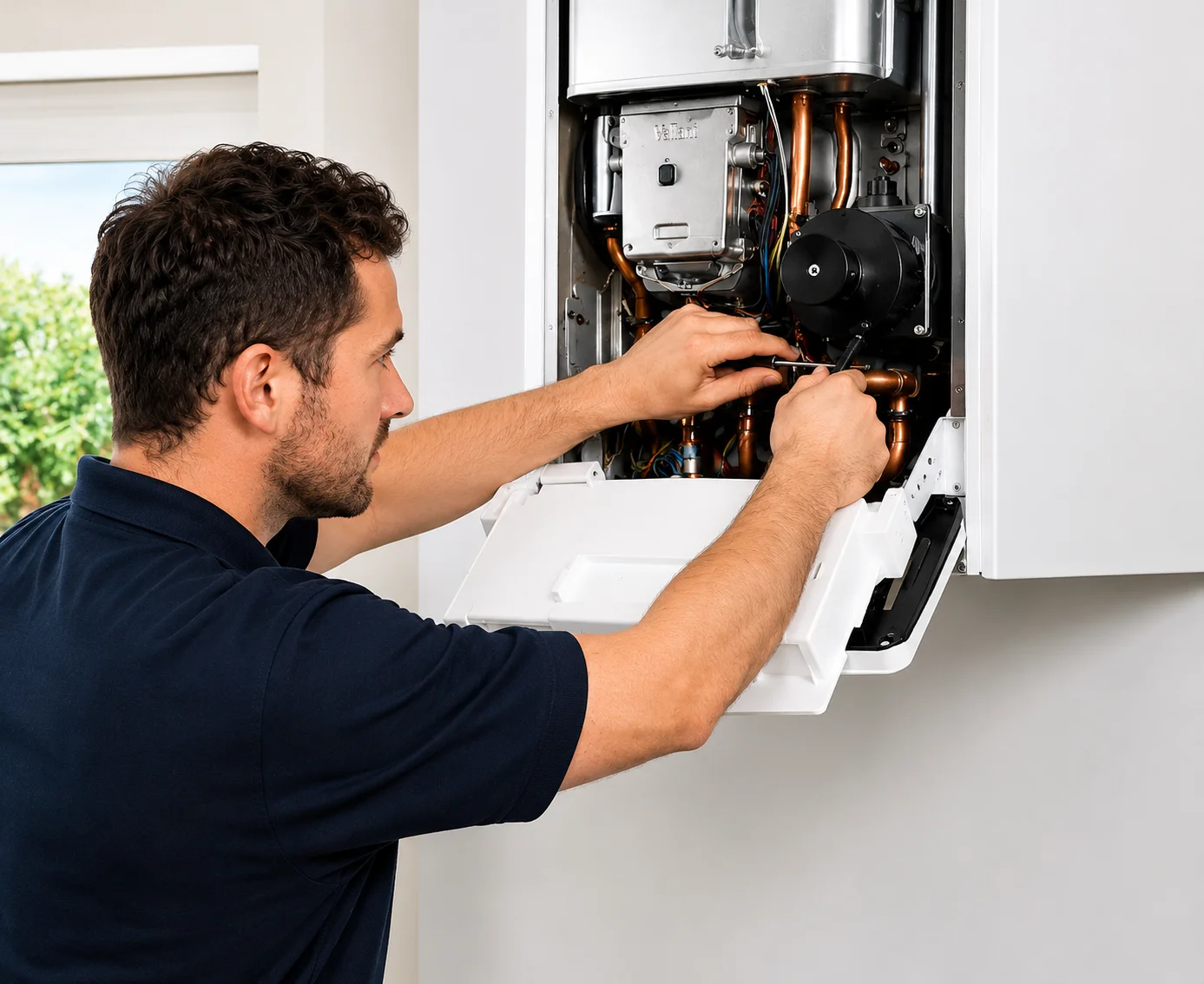
A boiler fault is not always caused by the boiler itself. Sometimes, the underlying problem sits elsewhere in the heating system. Poor circulation, uneven radiator performance, incorrect system pressure or unsuitable controls can all place additional demands on a boiler.
This is particularly important when a heating system has been altered over many years. Radiators may have been replaced, rooms extended, controls upgraded or pipework modified without the entire system being reassessed.
For homeowners looking for boiler repair in Cardiff, understanding how system balance affects performance can help identify whether a fault is an isolated boiler problem or part of a wider heating issue.
What does a balanced heating system mean?
A balanced heating system distributes heated water around the property so that each radiator receives an appropriate amount of flow for the heat required in that room.
When a system is balanced correctly, radiators should heat in a controlled and consistent way rather than some becoming extremely hot while others remain comparatively cool.
A heating engineer may assess:
- Radiator temperatures
- Lockshield valve settings
- Thermostatic radiator valves
- Flow and return temperatures
- Pump operation
- System pressure
- Air within radiators
- Circulation through different parts of the system
Balance is not the same as boiler output. A correctly sized boiler can still operate poorly if water is not circulating effectively.
How can poor system balance affect a boiler?
Poor balance can change how quickly heat moves around the property.
If some radiators receive too much flow while others receive too little, certain areas may heat quickly while others struggle. This can affect how frequently the boiler needs to operate to satisfy the heating controls.
Possible symptoms include:
- Some radiators heating much faster than others
- Certain rooms remaining cold
- Boiler cycling more frequently
- Long heating periods
- Uneven temperatures around the property
- Higher than expected energy use
- Radiators that remain partially cold
These symptoms do not automatically mean the boiler needs repairing. They may indicate that the wider heating system requires investigation.
If your heating system is producing uneven temperatures or the boiler appears to be cycling unnecessarily, contact MPH Trades for advice. A system assessment can help identify whether the issue is with the appliance, circulation or wider system balance.
Could air or sludge cause similar symptoms?
Yes.
Air trapped inside a radiator can prevent part of its surface from heating properly. Sludge and debris can also restrict circulation, particularly in older heating systems.
A radiator that is cold at the top may indicate trapped air, while cold areas elsewhere can have different causes. These symptoms should not be used as a definitive diagnosis without proper inspection.
System contamination can also affect circulation through the heating system. In some circumstances, cleaning and system protection may be recommended when a boiler is being repaired or replaced.
The appropriate solution depends on the condition of the system.
Why does radiator balance matter when repairing a boiler?
A boiler works as part of a complete heating circuit.
If circulation is restricted or uneven, the boiler may not receive the expected flow and return conditions. Depending on the system and fault, this can contribute to abnormal operation or make existing problems more difficult to diagnose.
This is why effective boiler repair should consider the circumstances surrounding the fault rather than simply resetting the appliance.
An engineer may need to determine whether the boiler fault is genuinely originating from the appliance or whether another part of the system is contributing to the problem.
Let’s get started, Which fuel powers your boiler?
Mains Gas
LPG
It just takes 60 Sec
And then you can book a free consultation
Can incorrect system pressure contribute to faults?
Yes.
Most sealed central heating systems operate within a specified pressure range. If pressure is too low, the system may not circulate correctly or may stop operating as intended. If pressure is repeatedly too high, there may be an underlying issue requiring investigation.
Potential causes of pressure problems can include:
- Water loss from the system
- A leak
- Expansion vessel issues
- Pressure relief valve problems
- Incorrect filling
- Other component faults
Repeatedly topping up the pressure without finding the reason is not a long-term solution.
If the pressure keeps falling, the cause should be investigated rather than treating each pressure drop as a separate event.
Can poor circulation make a boiler work harder?
It can affect how the boiler responds to heating demand.
If heated water cannot circulate effectively around the system, the boiler may reach its target temperature while parts of the property remain cold. The system may then continue requesting heat, creating an inefficient operating pattern.
However, several different issues can produce similar symptoms.
A heating engineer may therefore check:
| Area | What may be assessed |
| Boiler | Fault codes, components and operation |
| Radiators | Heat distribution and condition |
| Valves | Operation and settings |
| Pump | Circulation performance |
| Pressure | System pressure and stability |
| Pipework | Restrictions or condition |
| Controls | Thermostat and heating demand |
| System water | Signs of contamination |
This wider assessment can prevent the wrong component from being blamed.
Could radiator valves affect system balance?
Yes.
Thermostatic radiator valves control the amount of hot water entering individual radiators according to the temperature of the room. Lockshield valves are used to control flow and are important when balancing the system.
If valves are incorrectly adjusted, stuck or damaged, the distribution of heat can become uneven.
A radiator that does not heat properly may therefore require a valve inspection rather than a boiler replacement.
Similarly, turning every radiator valve fully open does not necessarily create the best system balance.
When does poor balance become a bigger problem?
Occasional uneven heating is not necessarily a serious fault. However, persistent symptoms deserve attention, particularly when they occur alongside repeated boiler problems.
Warning signs include:
- Frequent boiler shutdowns
- Repeated fault codes
- Unusual pressure changes
- Persistent cold radiators
- Regular bleeding of radiators
- Unusual pump noise
- The boiler repeatedly needing a reset
- Heating that takes much longer than expected
If the same boiler fault keeps returning after a repair, the underlying cause should be investigated.
A replacement component may temporarily restore operation without resolving the wider system problem.
Can an oversized boiler contribute to cycling?
Yes.
An oversized boiler can produce more heat than the system needs during periods of low demand. If its minimum output is also relatively high, it may reach its target temperature quickly and cycle on and off.
Poor system balance can make the operating pattern more complicated.
This is why recurring faults should not always be treated as isolated component failures. Boiler sizing, heat loss, radiator output and system circulation can all influence how the installation behaves.
What should an engineer check during a boiler repair?
The exact checks depend on the reported fault, but a thorough assessment may include both the boiler and the surrounding system.
An engineer may need to check:
- Boiler fault codes
- Electrical and control operation
- System pressure
- Pump operation
- Flow and return temperatures
- Radiator performance
- Valve operation
- Pipework condition
- Signs of air or contamination
- Whether the boiler is correctly responding to demand
This helps establish whether the fault is confined to the appliance.
For boiler repair in Cardiff, homeowners can also benefit from explaining the symptoms clearly before the visit. Mention when the problem occurs, whether it happens with heating or hot water, whether the boiler displays a fault code and whether any radiators behave differently.
A typical Cardiff home example
Consider a three-bedroom semi-detached home where the upstairs radiators become very hot while several downstairs radiators remain lukewarm. The boiler also switches off and restarts regularly during heating periods.
The homeowner initially assumes that the boiler is failing and requests a repair. An assessment, however, shows that the appliance is operating but the heating system is poorly balanced. Several radiator valves are incorrectly adjusted, and circulation is uneven.
After the system is balanced and the relevant components are checked, heat distribution improves. The boiler can then respond to demand without the same symptoms that originally prompted the call.
This example illustrates why a fault should be investigated in context rather than assuming that the boiler is always the source of the problem.
If your boiler has developed recurring faults, speak to MPH Trades and explain the full pattern of symptoms. Our team can assess whether the problem points towards the appliance or the wider heating system.
Is a repair always better than replacing the boiler?
Not necessarily.
A repair may be appropriate where the boiler is otherwise in good condition, and the fault can be safely resolved. Replacement may become more sensible when the appliance is old, unreliable, inefficient or repeatedly developing expensive faults.
The wider system should still be considered before replacement.
Installing a new boiler without addressing significant circulation or balance problems could leave the homeowner with a new appliance but the same underlying heating issue.
How can homeowners reduce the risk of recurring heating faults?
Regular attention to the whole heating system can help identify problems before they become disruptive.
Useful measures include:
- Having persistent pressure loss investigated
- Checking radiators for unusual cold areas
- Addressing repeated boiler fault codes
- Maintaining appropriate heating controls
- Having system contamination assessed
- Ensuring radiators are balanced where necessary
- Following manufacturer servicing recommendations
- Investigating unusual noises rather than ignoring them
Homeowners should also avoid repeatedly resetting a boiler without understanding why it is shutting down.
A reset can restore operation temporarily, but it does not necessarily address the underlying fault.
Find the Cause of Your Boiler Problem and Get the Right Fix
Boiler faults can sometimes be symptoms of a wider heating system problem. Poor balance, restricted circulation, incorrect valve settings, pressure issues and unsuitable system design can all affect how effectively a boiler responds to demand.
For homeowners considering boiler repair in Cardiff, the most useful approach is to identify the underlying cause rather than repeatedly treating the same symptom.
If your heating system is becoming unreliable or the same boiler fault keeps returning, contact MPH Trades for professional guidance. Our team can assess the boiler alongside the wider system and explain the most appropriate next step.
A properly diagnosed fault gives you a better chance of achieving a reliable heating system, whether the solution is a straightforward repair, system adjustment or, where justified, a complete boiler replacement.
Related articles
Let’s get started, Which fuel powers your boiler?
Mains Gas
LPG
At a glance
A boiler fault is not always caused by the boiler itself. Sometimes, the underlying problem sits elsewhere in the heating system. Poor circulation, uneven radiator performance, incorrect system pressure or unsuitable controls can all place additional demands on a boiler.
This is particularly important when a heating system has been altered over many years. Radiators may have been replaced, rooms extended, controls upgraded or pipework modified without the entire system being reassessed.
For homeowners looking for boiler repair in Cardiff, understanding how system balance affects performance can help identify whether a fault is an isolated boiler problem or part of a wider heating issue.
What does a balanced heating system mean?
A balanced heating system distributes heated water around the property so that each radiator receives an appropriate amount of flow for the heat required in that room.
When a system is balanced correctly, radiators should heat in a controlled and consistent way rather than some becoming extremely hot while others remain comparatively cool.
A heating engineer may assess:
- Radiator temperatures
- Lockshield valve settings
- Thermostatic radiator valves
- Flow and return temperatures
- Pump operation
- System pressure
- Air within radiators
- Circulation through different parts of the system
Balance is not the same as boiler output. A correctly sized boiler can still operate poorly if water is not circulating effectively.
How can poor system balance affect a boiler?
Poor balance can change how quickly heat moves around the property.
If some radiators receive too much flow while others receive too little, certain areas may heat quickly while others struggle. This can affect how frequently the boiler needs to operate to satisfy the heating controls.
Possible symptoms include:
- Some radiators heating much faster than others
- Certain rooms remaining cold
- Boiler cycling more frequently
- Long heating periods
- Uneven temperatures around the property
- Higher than expected energy use
- Radiators that remain partially cold
These symptoms do not automatically mean the boiler needs repairing. They may indicate that the wider heating system requires investigation.
If your heating system is producing uneven temperatures or the boiler appears to be cycling unnecessarily, contact MPH Trades for advice. A system assessment can help identify whether the issue is with the appliance, circulation or wider system balance.
Could air or sludge cause similar symptoms?
Yes.
Air trapped inside a radiator can prevent part of its surface from heating properly. Sludge and debris can also restrict circulation, particularly in older heating systems.
A radiator that is cold at the top may indicate trapped air, while cold areas elsewhere can have different causes. These symptoms should not be used as a definitive diagnosis without proper inspection.
System contamination can also affect circulation through the heating system. In some circumstances, cleaning and system protection may be recommended when a boiler is being repaired or replaced.
The appropriate solution depends on the condition of the system.
Why does radiator balance matter when repairing a boiler?
A boiler works as part of a complete heating circuit.
If circulation is restricted or uneven, the boiler may not receive the expected flow and return conditions. Depending on the system and fault, this can contribute to abnormal operation or make existing problems more difficult to diagnose.
This is why effective boiler repair should consider the circumstances surrounding the fault rather than simply resetting the appliance.
An engineer may need to determine whether the boiler fault is genuinely originating from the appliance or whether another part of the system is contributing to the problem.
Let’s get started, Which fuel powers your boiler?
Mains Gas
LPG
It just takes 60 Sec
And then you can book a free consultation
Can incorrect system pressure contribute to faults?
Yes.
Most sealed central heating systems operate within a specified pressure range. If pressure is too low, the system may not circulate correctly or may stop operating as intended. If pressure is repeatedly too high, there may be an underlying issue requiring investigation.
Potential causes of pressure problems can include:
- Water loss from the system
- A leak
- Expansion vessel issues
- Pressure relief valve problems
- Incorrect filling
- Other component faults
Repeatedly topping up the pressure without finding the reason is not a long-term solution.
If the pressure keeps falling, the cause should be investigated rather than treating each pressure drop as a separate event.
Can poor circulation make a boiler work harder?
It can affect how the boiler responds to heating demand.
If heated water cannot circulate effectively around the system, the boiler may reach its target temperature while parts of the property remain cold. The system may then continue requesting heat, creating an inefficient operating pattern.
However, several different issues can produce similar symptoms.
A heating engineer may therefore check:
| Area | What may be assessed |
| Boiler | Fault codes, components and operation |
| Radiators | Heat distribution and condition |
| Valves | Operation and settings |
| Pump | Circulation performance |
| Pressure | System pressure and stability |
| Pipework | Restrictions or condition |
| Controls | Thermostat and heating demand |
| System water | Signs of contamination |
This wider assessment can prevent the wrong component from being blamed.
Could radiator valves affect system balance?
Yes.
Thermostatic radiator valves control the amount of hot water entering individual radiators according to the temperature of the room. Lockshield valves are used to control flow and are important when balancing the system.
If valves are incorrectly adjusted, stuck or damaged, the distribution of heat can become uneven.
A radiator that does not heat properly may therefore require a valve inspection rather than a boiler replacement.
Similarly, turning every radiator valve fully open does not necessarily create the best system balance.
When does poor balance become a bigger problem?
Occasional uneven heating is not necessarily a serious fault. However, persistent symptoms deserve attention, particularly when they occur alongside repeated boiler problems.
Warning signs include:
- Frequent boiler shutdowns
- Repeated fault codes
- Unusual pressure changes
- Persistent cold radiators
- Regular bleeding of radiators
- Unusual pump noise
- The boiler repeatedly needing a reset
- Heating that takes much longer than expected
If the same boiler fault keeps returning after a repair, the underlying cause should be investigated.
A replacement component may temporarily restore operation without resolving the wider system problem.
Can an oversized boiler contribute to cycling?
Yes.
An oversized boiler can produce more heat than the system needs during periods of low demand. If its minimum output is also relatively high, it may reach its target temperature quickly and cycle on and off.
Poor system balance can make the operating pattern more complicated.
This is why recurring faults should not always be treated as isolated component failures. Boiler sizing, heat loss, radiator output and system circulation can all influence how the installation behaves.
What should an engineer check during a boiler repair?
The exact checks depend on the reported fault, but a thorough assessment may include both the boiler and the surrounding system.
An engineer may need to check:
- Boiler fault codes
- Electrical and control operation
- System pressure
- Pump operation
- Flow and return temperatures
- Radiator performance
- Valve operation
- Pipework condition
- Signs of air or contamination
- Whether the boiler is correctly responding to demand
This helps establish whether the fault is confined to the appliance.
For boiler repair in Cardiff, homeowners can also benefit from explaining the symptoms clearly before the visit. Mention when the problem occurs, whether it happens with heating or hot water, whether the boiler displays a fault code and whether any radiators behave differently.
A typical Cardiff home example
Consider a three-bedroom semi-detached home where the upstairs radiators become very hot while several downstairs radiators remain lukewarm. The boiler also switches off and restarts regularly during heating periods.
The homeowner initially assumes that the boiler is failing and requests a repair. An assessment, however, shows that the appliance is operating but the heating system is poorly balanced. Several radiator valves are incorrectly adjusted, and circulation is uneven.
After the system is balanced and the relevant components are checked, heat distribution improves. The boiler can then respond to demand without the same symptoms that originally prompted the call.
This example illustrates why a fault should be investigated in context rather than assuming that the boiler is always the source of the problem.
If your boiler has developed recurring faults, speak to MPH Trades and explain the full pattern of symptoms. Our team can assess whether the problem points towards the appliance or the wider heating system.
Is a repair always better than replacing the boiler?
Not necessarily.
A repair may be appropriate where the boiler is otherwise in good condition, and the fault can be safely resolved. Replacement may become more sensible when the appliance is old, unreliable, inefficient or repeatedly developing expensive faults.
The wider system should still be considered before replacement.
Installing a new boiler without addressing significant circulation or balance problems could leave the homeowner with a new appliance but the same underlying heating issue.
How can homeowners reduce the risk of recurring heating faults?
Regular attention to the whole heating system can help identify problems before they become disruptive.
Useful measures include:
- Having persistent pressure loss investigated
- Checking radiators for unusual cold areas
- Addressing repeated boiler fault codes
- Maintaining appropriate heating controls
- Having system contamination assessed
- Ensuring radiators are balanced where necessary
- Following manufacturer servicing recommendations
- Investigating unusual noises rather than ignoring them
Homeowners should also avoid repeatedly resetting a boiler without understanding why it is shutting down.
A reset can restore operation temporarily, but it does not necessarily address the underlying fault.
Find the Cause of Your Boiler Problem and Get the Right Fix
Boiler faults can sometimes be symptoms of a wider heating system problem. Poor balance, restricted circulation, incorrect valve settings, pressure issues and unsuitable system design can all affect how effectively a boiler responds to demand.
For homeowners considering boiler repair in Cardiff, the most useful approach is to identify the underlying cause rather than repeatedly treating the same symptom.
If your heating system is becoming unreliable or the same boiler fault keeps returning, contact MPH Trades for professional guidance. Our team can assess the boiler alongside the wider system and explain the most appropriate next step.
A properly diagnosed fault gives you a better chance of achieving a reliable heating system, whether the solution is a straightforward repair, system adjustment or, where justified, a complete boiler replacement.
Related articles
Address
Office Location:
376 Newport Road
Cardiff
CF23 9AE
The content on this website is owned by us and our licensors. Do not copy the content (including images) without our consent.
MPH INSTALLATIONS LTD (MPH PLUMBING & HEATING) is an Introducer Appointed Representative (Financial Services Register No. 916214) of Phoenix Financial Consultants Limited (Phoenix). Phoenix is a credit broker, not a lender. Phoenix is authorised and regulated by the Financial Conduct Authority (FRN: 539195), and offers finance from its panel of lenders. All finance subject to status and credit checks.

Powered by We Build Trades © 2026
Amout of credit
£0.00
Monthly
£0.00
Total payable
£0.00
Interest (fixed)
£0.00
APR
-